
Jaw pain can make everyday tasks — like chewing, talking, and even yawning — uncomfortable or downright painful. For many people, this discomfort is tied to issues with the jaw joint, often referred to as TMJ (temporomandibular joint) disorder.
If you’ve been dealing with persistent jaw discomfort, headaches, or clicking sounds when opening and closing your mouth, you may be wondering: Can orthodontic treatment actually help with TMJ pain?
The answer is: yes — in some cases, orthodontics can help reduce or resolve TMJ-related symptoms, especially when those symptoms are connected to bite misalignment. Let’s take a closer look.
What Is TMJ (or TMD)?
The TMJ (temporomandibular joint) connects your lower jaw to your skull. You have one on each side of your head, and they work together like sliding hinges, allowing you to speak, chew, and move your jaw smoothly.
When something goes wrong with this system, it’s referred to as TMD (temporomandibular joint disorder). Symptoms of TMD can include:
- Jaw pain or stiffness
- Clicking, popping, or grinding sounds in the joint
- Headaches or facial soreness
- Earaches or a feeling of pressure near the ears
- Difficulty opening the mouth wide
- Locking of the jaw
TMD can be caused by a variety of factors — from trauma and arthritis to stress-related clenching or grinding. But one major contributor is often bite misalignment, which is where orthodontics may play a role.
How Does Bite Misalignment Affect the Jaw?
When your teeth don’t come together properly — a condition known as malocclusion — it can put uneven pressure on your jaw joint and surrounding muscles. Over time, this imbalance can lead to:
- Muscle fatigue
- Inflammation in the joint
- Difficulty chewing evenly
- Shifting of the jaw over time
- Chronic discomfort or pain
In these cases, correcting the bite through orthodontic treatment may help reduce strain on the TMJ and support healthier jaw function.
How Orthodontics May Help with TMJ Pain
Orthodontic treatment focuses on aligning the teeth and jaws for optimal function. In certain TMD cases, this can relieve symptoms by:
- Improving bite alignment — Helping upper and lower teeth meet evenly
- Reducing muscle strain — Easing pressure on jaw joints and muscles
- Stabilizing jaw position — Preventing shifting that contributes to discomfort
- Creating a balanced bite — Allowing for even force distribution during chewing
Here are some examples of orthodontic approaches that may help:
Braces
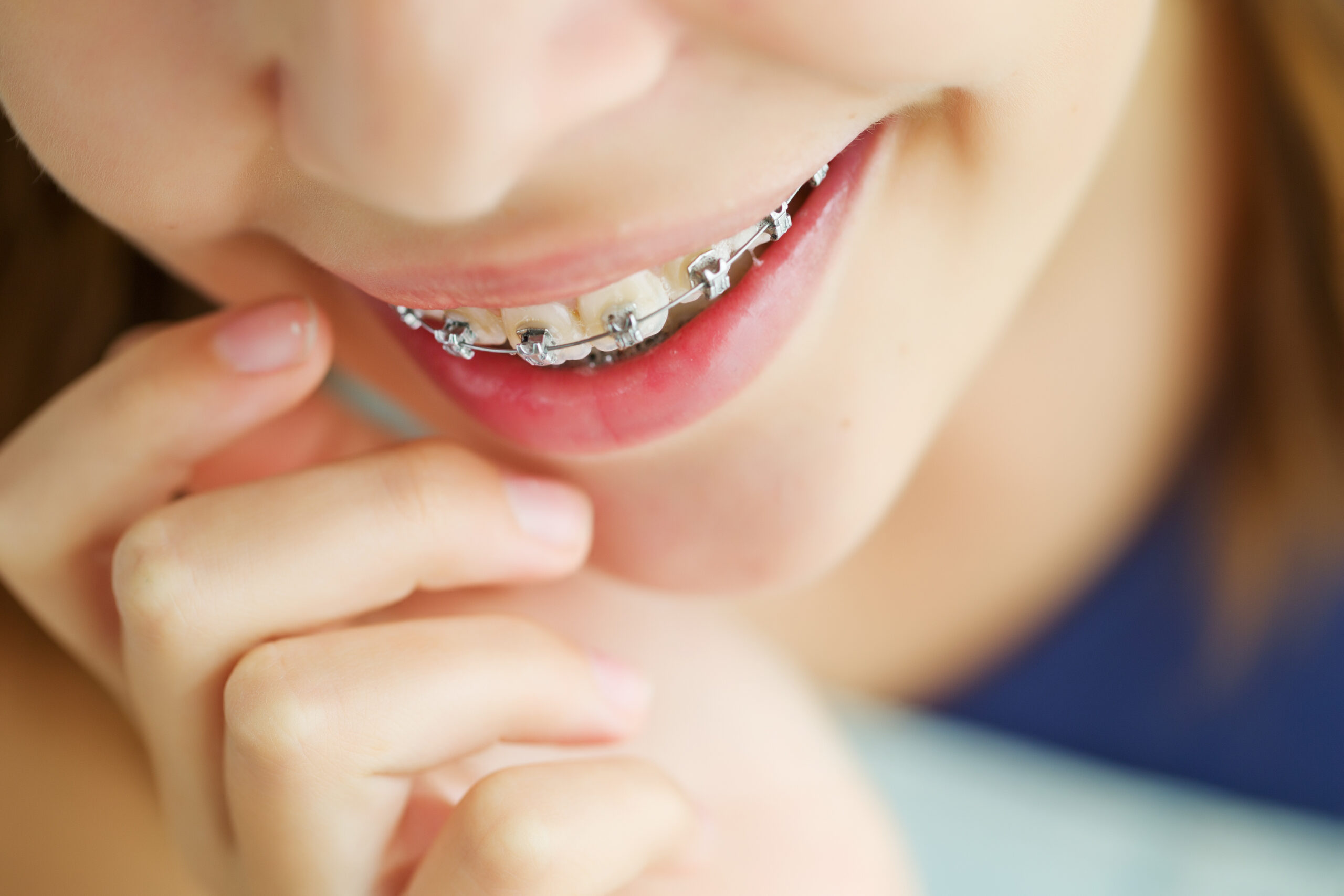
Traditional braces use brackets and wires to shift teeth and correct alignment issues. Braces are especially effective for complex bite problems like overbites, underbites, or crossbites — which can all contribute to TMJ symptoms.
Invisalign
Clear aligners like Invisalign can also improve bite function by gradually repositioning teeth. Many adult patients with mild to moderate bite misalignment prefer this discreet option.
Other Appliances
In some cases, orthodontists may recommend custom appliances, like splints or nightguards, to relieve jaw tension during treatment or while evaluating the source of pain.
Will Orthodontic Treatment Cure TMJ?
It’s important to note that not all jaw pain is caused by orthodontic issues, and not all TMJ disorders can be resolved with braces or aligners alone. Every case is unique.
Orthodontics may be helpful when TMD symptoms are clearly linked to misalignment or bite issues. But if your pain stems from other causes — like arthritis, injury, or stress — additional or alternative treatments may be more effective.
Your provider may recommend a comprehensive approach, including:
- Physical therapy or jaw exercises
- Stress management to reduce clenching/grinding
- Anti-inflammatory medications
- Bite splints or occlusal guards
- Surgery (in rare, severe cases)
What to Expect if You Pursue Orthodontic Treatment
If you’re exploring orthodontics as part of your TMJ treatment plan, here’s what you can typically expect:
- Comprehensive evaluation — Includes x-rays, bite analysis, and jaw function assessment
- Personalized treatment plan — Based on your specific alignment and symptoms
- Ongoing monitoring — Your provider will track jaw function throughout treatment
- Combination care (if needed) — Orthodontics may be paired with other therapies for best results
It’s essential to work with a provider who has experience in diagnosing and treating TMD-related cases to ensure you get the right type of care.
Final Thoughts: Can Braces or Invisalign Help with Jaw Pain?
If your jaw discomfort is linked to how your teeth come together, orthodontic treatment could be a valuable part of your solution. By addressing bite issues, braces or aligners can reduce strain on the jaw joint and muscles — potentially relieving pain and improving long-term comfort.
However, since TMD is complex and varies from person to person, it’s best to begin with a thorough evaluation to determine what’s causing your symptoms and whether orthodontics is the right next step.
Wondering If Orthodontics Could Help with TMJ Symptoms?
At NC Tooth Docs, we take a thoughtful, personalized approach to orthodontic care — including patients dealing with jaw pain or TMD. Our team can assess your bite, evaluate your jaw function, and determine whether orthodontic treatment could provide the relief you’re looking for.
Don’t keep living with discomfort —
Schedule a consultation at our Mooresville, Huntersville, or Harrisburg office to explore your options and get expert answers about your jaw health.